



The Inconvenient Risk of a Toxic CEO
July 20, 2026
FIFA Forward Enterprise: Risk and Governance Lessons from a $20B Failure
August 3, 2026The rotational chief audit executive (CAE) model has been generating spirited debate within the internal audit profession for more than two decades. I have written and spoken frequently on the topic, often questioning whether rotating executives into the CAE role strengthens or weakens the internal audit function. But the profession has changed dramatically since practice first emerged.
Internal auditors are now expected to provide assurance over emerging technologies, advise on strategic risks, evaluate organizational culture, and help organizations navigate an increasingly uncertain world. A CAE vested with deep industry/enterprise knowledge is more critical today than ever. For this reason, among others, the rotational CAE model is a mainstay in many organizations. For some, it serves as a leadership development program, exposing high-potential company executives to enterprise-wide risks and governance before they move into senior business roles. Others view it as an opportunity to infuse internal audit with fresh perspectives and stronger connections to the business.
The Debate is Changing
The question is no longer whether organizations should use rotational CAEs. The better question is whether temporary leaders can build lasting value.
The answer is yes, but only if organizations understand both the opportunities and the risks.
There is little doubt that rotational CAEs can bring meaningful advantages. Executives arriving from finance, operations, technology, or other business functions often possess deep operational knowledge and firsthand experience of managing risks. They understand how decisions are made, where strategic challenges emerge, and how the business creates value. That perspective can strengthen internal audit’s relevance and improve its dialogue with management.
Organizations also benefit when future executives spend time leading internal audit. Few assignments provide such a comprehensive view of an enterprise. Internal audit examines virtually every significant process, major risk, and governance practice. Executives who later assume business leadership roles often carry with them a greater appreciation for risk management, internal controls, and ethical decision making.
Those are meaningful benefits and should not be dismissed. Yet they come with significant challenges that boards and audit committees cannot afford to overlook. The first is independence and objectivity.
The Stakes Include Credibility
Internal audit’s credibility rests on its ability to provide objective assurance. When a rotational CAE knows that another executive assignment awaits after two or three years, stakeholders and outsiders may reasonably question whether difficult issues will be pursued with the same rigor. Even when no impairment actually exists, the perception of compromised objectivity can erode confidence in internal audit’s work.
Professional credibility presents another challenge. Leading a modern internal audit function requires far more than executive presence. Today’s CAE must understand internal audit processes, the “political pressures” that often fall on the shoulders of the CAE, and the expectations of all stakeholders – not just the CEO or CFO who appointed them. They must also possess a command of The Global Internal Audit Standards, quality assurance, governance, ethics, fraud risks, stakeholder communications, and the unique role internal audit plays within the organization’s governance framework. Those competencies cannot be mastered overnight.
Most rotational executives are exceptionally capable leaders. That does not automatically make them effective CAEs. The demands placed on today’s internal audit leaders have also changed dramatically since this debate first emerged.
Organizations expect internal audit to embrace artificial intelligence responsibly, leverage advanced analytics, monitor emerging risks continuously, and provide insights that extend well beyond traditional assurance engagements. The profession is evolving rapidly, and successful transformation requires sustained leadership. It is difficult to establish a long-term vision when leadership changes every 3-5 years by design.
Talent represents another consideration. High-performing internal auditors want stability, mentoring, and confidence that the organization is investing in the profession. Frequent leadership transitions can create uncertainty about priorities, career development, and the future direction of the function. Recruiting specialists in areas such as cybersecurity, AI governance, and data analytics becomes even more challenging if prospective employees perceive the leadership team as temporary.
Trust Takes Time
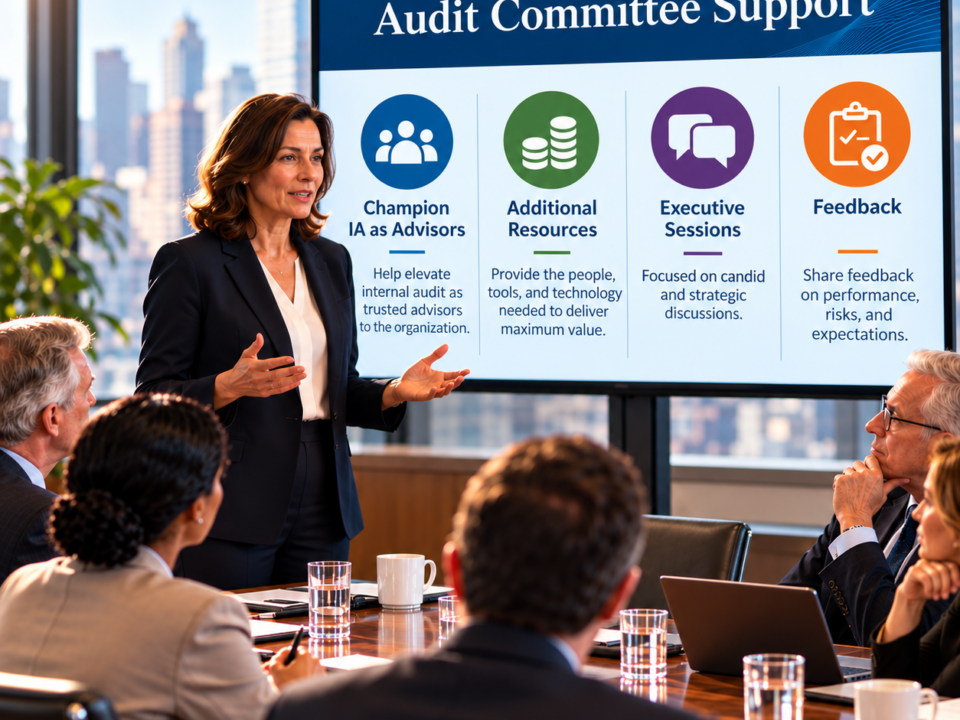
Perhaps most important, trust takes time. One of the most valuable relationships any CAE develops is with the audit committee. Effective oversight depends upon candid conversations, mutual confidence, and the willingness to discuss difficult issues without hesitation. Those relationships are built over years, not months. Audit committees often rely on their CAE as one of their most trusted advisors. That level of confidence cannot simply be transferred from one executive to another.
None of this suggests that career CAEs hold a monopoly on effective leadership. Long-serving CAEs face their own risks. Complacency can quietly replace innovation. Familiarity can dull curiosity. A leader who has spent decades in the same role may become reluctant to challenge longstanding practices or rethink how internal audit delivers value. Longevity alone does not produce transformational leadership.
The profession needs leaders who remain curious, embrace change, and continually challenge themselves regardless of how they arrived in the role.
That brings us back to the central question. Can temporary leaders build lasting value? They certainly can, but success depends far less on the individual than on the organization’s commitment to making the model work.
Success Demands Safeguards
Boards and audit committees should carefully evaluate whether rotational candidates possess both executive leadership skills and a genuine commitment to internal audit’s mission. Organizations should provide robust onboarding, mentoring from experienced audit professionals, and sufficient time for leaders to understand the profession before expecting transformational results. They should also establish safeguards that protect independence and objectivity and eliminate any perception that future career opportunities could influence audit results.
Finally, organizations should recognize that transformation is not a two-year project. If they expect internal audit to modernize, adopt AI responsibly, strengthen stakeholder relationships, and build a high-performing team, they must provide continuity that extends beyond any individual leader’s tenure.
The rotational CAE model is neither inherently flawed nor inherently superior. It is simply another governance decision, one that carries both opportunity and risk.
Organizations that view the role merely as a developmental assignment may unintentionally weaken one of their most important governance functions. Those that thoughtfully select leaders, preserve internal audit’s independence, and invest in long-term success can realize significant benefits for both the organization and the profession.
The issue has never been whether a CAE rotates into the role. The issue is whether the organization has positioned that leader to leave the internal audit function stronger than they found it.




I welcome your comments via LinkedIn or Twitter (@rfchambers).