



Organizations With Bad Cultures Are Often the Last to Know
September 2, 2025
The Challenge of Auditing in a FOFO Culture
September 21, 2025For the last 5 years, I have carefully monitored the perceived strategic risks facing the internal audit profession. For much of that period, one strategic risk has towered above all others: “The Inability to Attract and Retain Talent.” As I noted last year, the talent risk is “not surprising, considering the overall talent shortage in overheated economies around the world. However, I believe it also reflects the challenges (as several other strategic risks indicate) of recruiting and retaining skills that are crucial to the profession’s mission – particularly technology.”
The most recent strategic risk survey featured a new #1 strategic risk (An Inability to Leverage AI to Drive Greater Internal Audit Efficiency/Productivity), but the talent risk was still prominent at #2.
As I have frequently observed, the past five years have been marked by an unrelenting state of disruption. We are living in an era of permacrisis, with risks multiplying faster than organizations can adapt. Supply chain volatility, geopolitical turmoil, cyber threats, and regulatory uncertainty collide in ways few could have predicted. These same dynamics strain internal audit’s ability to staff teams with the right skills.
At the same time, the internal audit profession is undergoing an AI-induced transformation. AI tools are rapidly expanding audit coverage, data analytics, and reporting. They continue to raise uncomfortable questions about the future role of human auditors.
Despite the challenges, internal audit can still win the race for relevance. Our profession’s future rests on how we manage talent today. As I noted earlier this year:
If we cling solely to our historical mandates, the finish line will belong to AI. But if we evolve, embrace our human strengths, and augment ourselves with the best that technology has to offer, we won’t just remain relevant—we’ll become more indispensable than ever. People won’t speak of “AI Auditors,” they will simply associate us with the capability to audit AI as well at the full portfolio of risks their organizations face.
We must remind ourselves: AI may analyze faster, but it doesn’t inspire trust. It may detect patterns, but it doesn’t understand people. And it may deliver insight, but it doesn’t deliver wisdom.
The real race is not about speed. It’s about significance. And in that race, we have every reason to believe we can—and will—win.
The Past Decade: How the Stakes Have Changed
I first explored the imperative to strategically address internal audit’s talent in 2016. At that time, the concern was whether internal audit could develop the skills to audit culture, cybersecurity, and big data. At the time, 65 percent of auditors who had not reviewed cybersecurity risks admitted it was due to a lack of skills. That gap was troubling, but manageable with training, hiring, and co-sourcing.
Fast forward to 2025. The gaps are wider and the stakes are higher. Today’s environment demands that internal audit be able to provide assurance across a sprawling risk landscape that includes:
- Cybersecurity and privacy.
- Geopolitical and supply chain disruption.
- ESG reporting and greenwashing risks.
- AI governance, ethics, and algorithmic bias.
- Culture and conduct risk in volatile times.
As critical (and even existential) as these risks are, the ultimate challenge to internal audit may be to leverage skills and attributes that are not easily replicated by AI. In that regard, I often coach internal audit teams to cultivate and sustain what I call human internal auditor superpowers.
The Human Factor: Internal Auditor Superpowers
The true superpowers of human internal auditors are qualities that no machine can currently replace.
Critical thinking and strategic insight set internal auditors apart. While AI can process data and explain what happened, only a human auditor can interpret the results, uncover the “why,” and connect seemingly unrelated pieces of information to reveal their broader impact on the organization. Strong auditors also move beyond identifying problems. They provide practical solutions, anticipate risks before they escalate, and communicate their findings in a way that tells a compelling story leaders can act on.
Relationships and communication are just as important. Auditors earn trust by listening carefully, showing humility, and engaging with others as partners rather than adversaries. Empathy allows them to turn tense interviews into genuine conversations, while their ability to influence change ensures that findings are treated as opportunities for improvement rather than battles to be won.
Ethical strength defines the profession. Internal auditors serve as the conscience of the organization. Their integrity, objectivity, and professional skepticism protect against bias and blind acceptance of information. It takes courage to stand firm when findings are unpopular, and resilience to withstand pressure from senior leaders. These qualities safeguard the credibility of the profession.
Finally, curiosity and skepticism are essential in today’s fast-changing environment. Great auditors are lifelong learners who stay ahead of emerging risks, master new technologies, and use tools like AI and analytics to focus on higher-value work. They also bring creativity to complex problems, offering fresh ideas where standard solutions fall short.
In the end, AI will always be a powerful ally, but it is these human superpowers that ensure internal auditors remain indispensable in the AI era.
The Imperative for a Talent Management Strategy
I firmly believe that the future of internal departments and even the profession itself will depend on securing and retaining the vital talent to complement the capabilities of AI. As I advocated in 2016, I believe that great internal audit teams in the future will be enabled by a strong talent management strategy. Without a strategy, departments risk gaps in expertise, high turnover, and ultimately declining relevance. A strong strategy ensures the right skills are in place, nurtures future leaders, and builds resilience against disruption. It also fosters engagement, strengthens retention, and positions internal audit as a career destination.
The form and content of a talent management strategies will obviously vary based on factor such as the size of the internal audit team, industry, geography, etc. However, I would recommend that CAEs consider the following actionable steps when forging/revising their talent management strategies. These include:
- Develop Existing Talent with Precision. Continuous learning on emerging risks like AI, ESG, and cybersecurity must be a priority. Structured rotation programs can expose auditors to new areas of the business, while AI itself can be used as a training accelerator, simulating scenarios to sharpen critical thinking. Leadership development is equally important, since tomorrow’s CAEs will need to be agile, influential, and tech-savvy.
- Acquire Talent in a Tight Market. Compensation matters, but flexible work, career clarity, and purpose-driven roles often matter more. The focus should be on “hybrid” talent, people who combine technical expertise with strong communication skills. Broader pipelines are essential, so partnerships with universities, professional associations, and even nontraditional talent pools can make a difference. Every new hire should also bring fluency in data and technology.
- Co-Source Strategically. External specialists can provide expertise in areas like AI ethics or climate modeling, yet internal audit must retain oversight. Co-sourcing should supplement your team, not replace it, and it should be treated as a bridge while in-house skills are being developed.
- Retain Talent with Intent. Career paths should be redesigned so high-potential staff see a clear trajectory. Stretch assignments and global projects keep employees engaged, while engagement itself should be monitored through surveys and stay interviews, not only when people are leaving. Perhaps most important, auditors need to feel their work matters. A sense of purpose remains the strongest retention lever.
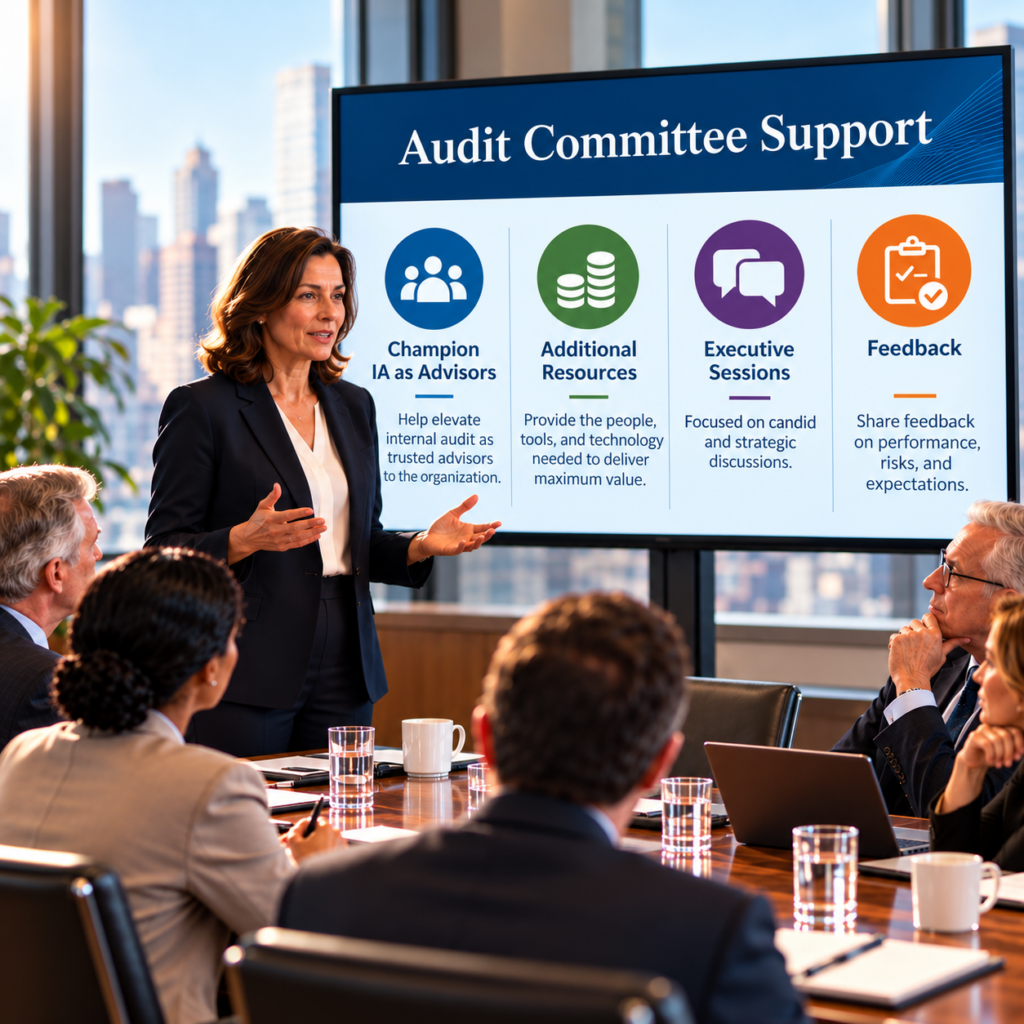
- Embed Talent Risk into Audit Planning. It should be assessed during annual risk reviews and reported directly to audit committees. Talent is not just an HR issue, it is a strategic risk that directly impacts internal audit’s effectiveness.
Looking Ahead
The next decade will test internal audit as never before. AI will reshape workflows. The permacrisis will strain organizations and auditors alike. Competition for talent will remain fierce.
But internal audit’s destiny is not preordained. If we embrace our human superpowers and execute bold talent strategies, we will thrive.
The question is not whether internal auditors will remain relevant. The question is whether CAEs will move fast enough to equip their teams for the future.
Those who do will position internal audit not just to survive, but to lead.


I welcome your comments via LinkedIn or Twitter (@rfchambers).